Articles

Updated:
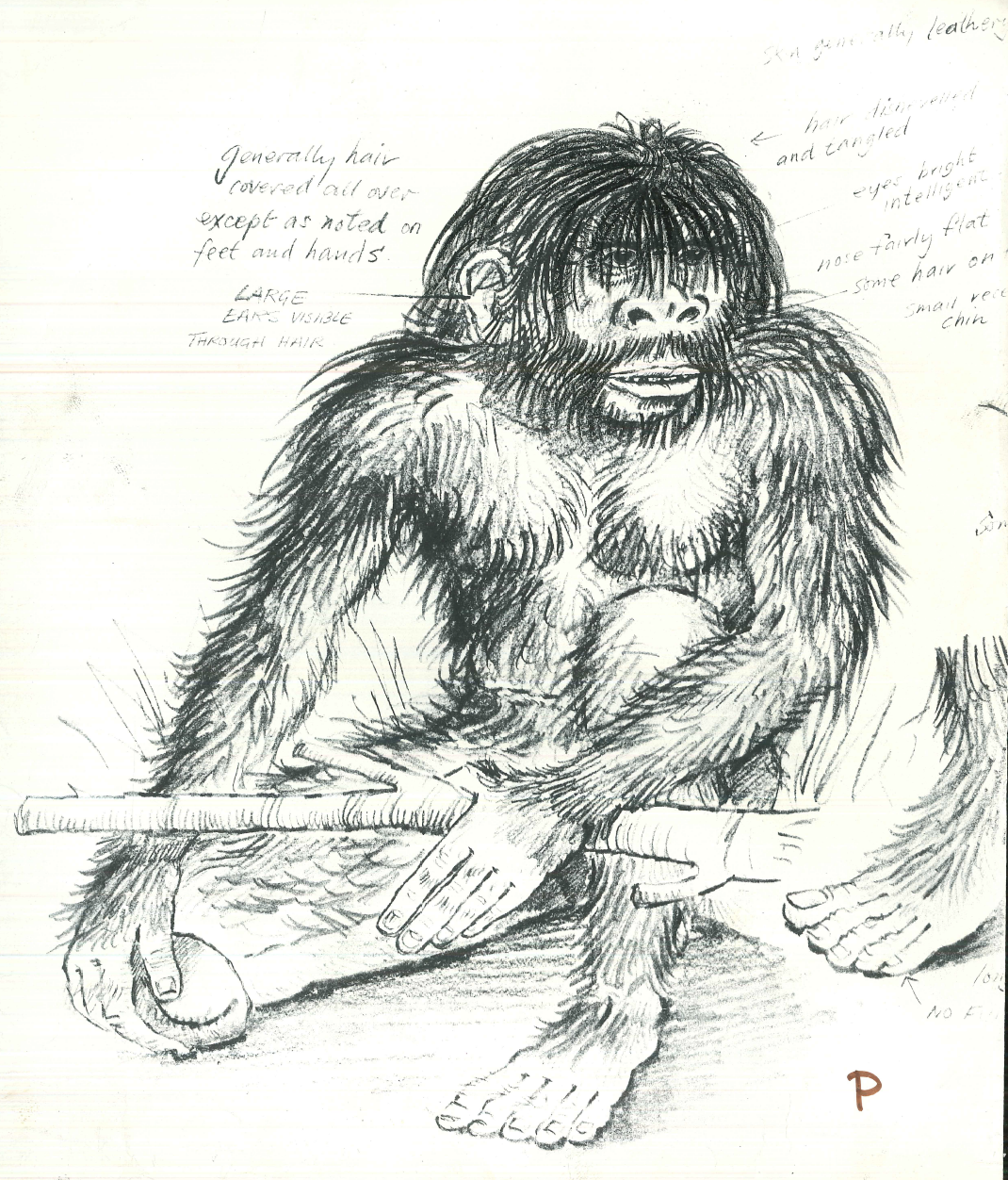
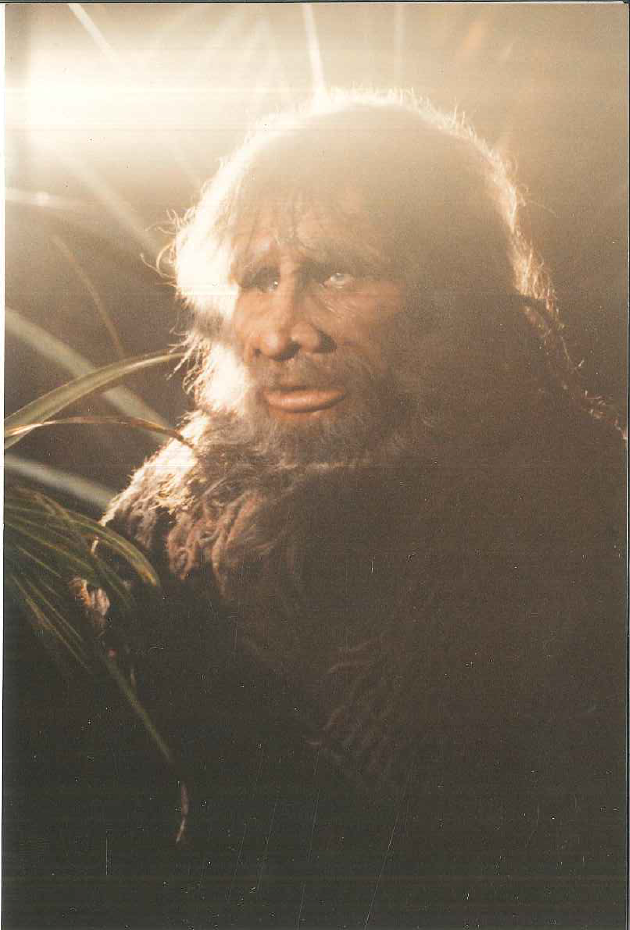
A design for a Bigfoot for the unmade film The Footage.

As mentioned in our post on Jacaranda Joe, George Romero had first tried to make a Bigfoot movie in the mid-1970s. The Footage was a project that Romero developed in between The Crazies and Martin that never came to fruition, but, at one point Pittsburgh Steelers legend Franco Harris was attached to star. (I have not been able to confirm this, but one of Romero's collaborators at the time suggest that Terry Bradshaw may have also been approached.) In the collection, we have three treatments/short scripts, with some substantial differences between them. 

The basic story, shared among all the versions, is about a TV show called Outdoorsman, USA (or some variation), described as "a weekly television program which is very popular among armchair sportsmen across the country. The documentary cameras follow a professionally mounted expedition into the wilderness each week on a fishing or hunting trip, and to make it all the more glamourous, a celebrity from Show Business or Sports 'stars' in each episode.... The film is purported to be actual, uncut documentation of the expedition, but as the program's popularity has grown, and agents and promoters have taken it as a place-to-lug or a place-to-build-an-image, much of the show's integrity has given way to showmanship and fakery." In the version labeled "Franco Version," the star is that week's celebrity participant, Johnny Wilson, a star quarterback trying to launch a career as an actor. In a 4-page treatment the star is Johnny Shaw, "a Star NFL Quarterback who is just beginning a career as a country and western recording artist."

In all versions, someone from the shoot stumbles onto an adorable baby Bigfoot while wandering through the woods: "a creature which is ape-like in appearance, but obviously intelligent. It is about the size of a ten year old human child, and its articulation of sounds is quite sophisticated for an animal." Whether out of concern (in one version, it is injured) or unthinking instinct to grab something unusual, somebody carries the baby Bigfoot back to camp. The adult Bigfeet give chase and the humans open fire.

In true Romero fashion, even though giant, seemingly intelligent creatures are trying to kill them, the humans fight amongst each other about what to do with both the baby and the film footage of it and the other Bigfeet. Either one would ensure the eventual destruction of these rare creatures and their apparently loving, almost utopian society, but the producer sees a once-in-a-lifetime opportunity. The greedy humans do not succeed in retaining either the baby or the footage. One version ends with the Bigfeet celebrating the return of their child. Not understanding the nature of film, the Bigfeet throw the footage into the air like streamers. Coming long before The Blair Witch Project and long before something like Cannibal Holocaust (or Spinal Tap, for that matter), The Footage is about a documentary crew filming an extraordinary encounter, but we never see the footage that results. Indeed, it is destroyed before it can even be developed. 

In one version, the athlete (here named "Jerry"), wants to set the baby free but doesn't prevail until the adult Bigfeet have already taken out most of the crew. He has a moment of connection with the Bigfoot communty in which the creatures accept him and he recognizes the emotion they all feel for their child: 

They go to the old male... he seems as old as time itself... they help him to his feet... they bring him to Jerry... what eyes... they are filled with sadness... a single tear comes down his face... all at once he stands alone, proud... the others kneel... it's almost... a spiritual thing... almost like being in the presence of a living God... Jerry is overcome with emotion... what should he do? ... the old one bows his head toward Jerry... Jerry looks up into his eyes... the silence is awesome... Jerry kneels before him in the manner of the others and bows his head... he places his hand on Jerry's head... there is a beautiful sound in unison from the others, like a bass chord from an organ. Jerry faints and slumps to the floor.*

We can see here something important about Romero's interest in monsters and creatures. It's a truism across his filmography (including a number of unmade films) that the real villains are people. Zombies might be hungry for flesh, but people are hateful, greedy, cruel, selfish, and destructive. Romero's heroes are often the ones who recognize the humanity, or at least the inherent value, of a monster. (And, of course, in his work it's often the case that cruelty towards monsters is paired with cruelty towards humans, especially those who are somehow marginalized by mainstream society: people of color, women, queer people, the poor, people with disabilities, foreigners. The Bigfoot communty in The Footage live a loving, communal life free of greed or hatred. They support and protect each other. 

In addition to the short scripts and treatment, the collection contains a number of designs and studies for the creatures. I have tracked down one of the artists, Don Fortenberry, who had no memory of the project who confirmed that it was indeed his work. He dated it to 1976, when he was a student at the Maryland Institute of art, and speculates that Romero solicited his character designs from students. 


* The ellipses here are all faithfully reproduced from Romero's own text. He frequently used ellipses in place of other punctuation, in a way that makes it exceedingly easy to identify his writing when a text is unsigned or unattributed!


-Adam Charles Hart
Updated:
Jacaranda Joe

In June 1994, George Romero traveled to Valencia College in Florida to make a short film called Jacaranda Joe. It was a re-imagined version of a movie he'd tried to make in the 1970s called The Footage, about a TV show in which a famous athlete learns to hunt alongside a handful of experienced outdoorsmen that stumbles onto a bigfoot community. But while that story was entirely focused on the film shoot, with the footage never actually being seen by anyone (one version ends with the bigfeet throwing the film reels into the air like streamers), Jacaranda Joe takes place after a clip from a similar TV show has leaked out. It was very much a proto-found footage movie, about which Romero told a local paper that he "wants to know if audiences can be scared by a documentary format." But it was also pre-Blair Witch Project, and so that footage makes up only a few seconds of the running time. 

Joe is set at a Geraldo Rivera-like talk show called Remington, on which the sleazy host is discussing footage of a swamp-dwelling bigfoot-like creature (what Floridians call a "skunk ape") that had been captured on video by the TV crew. In the aftermath of that footage getting out, the small town of Jacaranda had become overrun by tourists and aspiring hunters and filmmakers hoping to find "Joe" themselves. The talk show panel debates whether Joe is real or a hoax, with a representative of a local Seminole community who claims to have seen Joe also talking about tribal customs and the cruelty and destruction of white American society. (Amazingly, one of the actors considered for this role - who was not cast, alas - was the great horror novelist Owl Goingback, who had then not yet published his first book. Romero, who became a fan of Goingback's work, would later work with him to attempt to produce an adaptation of his book Evil Whispers. According to Goingback, they were in talks with a studio but a writers strike put the brakes on any possible deal. In the archive, we have a letter from Goingback to Romero hoping to clarify innacuracies in the Jacaranda Joe script that unfortunately do not seem to have been corrected.)

The talk show builds to a reveal of the footage of Joe, slowed down to give the audience a better look at the creature. It ends with Remington teasing further discussion and revelations on the rest of the episode. The film was conceived to leave open the potential for Romero to return the following year to expand it, possibly into a feature-length production. There is a VHS workprint contained in the Pitt collection that runs about 17 minutes, with no credits or titles. It does, however, conform perfectly to scripts and storyboards, so we can presume this to be a complete version.

The film was shot over the course of ten days, using a cast and crew mixing students, faculty, and local industry professionals. Our materials include preliminary cast and crew lists and correspondence, largely between Romero and the film's producer, Valencia's Ralph Clemente

Little has been written about Jacaranda Joe, and it's unclear whether it was ever screened publicly, even at Valencia. Because none of Romero's customary collaborators worked on it, and because it was such a quick shoot, there was not much knowledge of it even among people who knew Romero well. It's a fascinating film! It's a playful experiment that's funny and pointed and takes the premise in unexpected directions. In other words: a George Romero movie. 

Endless thanks to Elizabeth Tobin Kurtz, Gregg Hale, Owl Goingback, and Bruce Wood for their assistance!!!


-Adam Charles Hart

Updated:
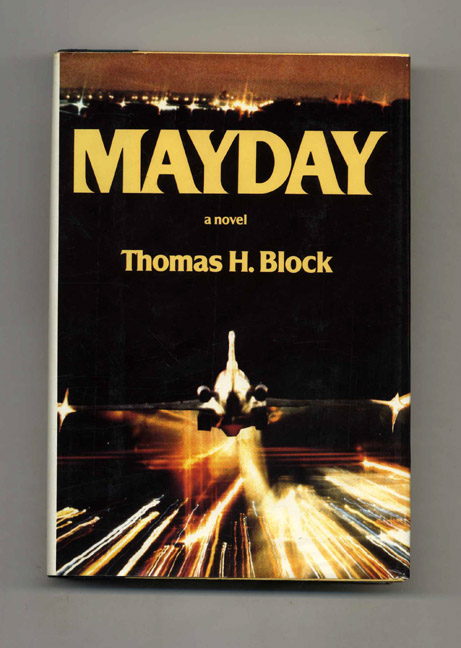
Mayday Cover

Possibly the most remarkable aspect of George Romero's career was how incredibly prolific he was. He would write almost constantly, as evidenced by the hundreds of drafts of made and unmade projects we have in the archive, and he would work closely with collaborators to develop others. Amazingly, we are still hearing about projects that are not represented in the archive - scripts, treatments, stories, and fragments that, for one reason or another, Romero did not hold on to. Some of his earliest work - the anthology feature, which was filmed and edited, Expostulations, and a feature project called Slant or Fugue - seems to have been mostly lost. But for someone who produced so much, it is perhaps inevitable that some drafts have fallen through the cracks. That is especially true for collaborations on which someone else was the credited screenwriter. Tracking these scripts down is important not because Romero is responsible for the ideas or the story, but because he was often a highly active collaborator whose feedback on drafts written by another screenwriter can provide fascinating, even revelatory, insight into Romero's creative process. The most substantial version of this contained in the archive is a 50+ page document sent to Lawrence D. Cohen that Romero cheekily titled "Much Ado About It." At that point, Romero was attached to direct Stephen King's It for television, and we have a multiple drafts and other materials related to a production that seemed to come very close to being realized. (Cohen's script would eventually be filmed by director Tommy Lee Wallace as the mini-series featuring an iconic Tim Curry as Pennywise.)

However, there are a number of growing projects that were developed for which we have nothing. One of the most intriguing is a project called Mayday, a screenplay written by Paul Larsen based on the book by Thomas Block and Nelson DeMille. It was one of several projects that Romero worked on in the early 1980s as a possible follow-up to Creepshow

The story - eventually filmed as a TV movie in 2005 - takes place on a passenger jet that is struck by an inactive missile. The collision and the subsequent loss in pressure kills numerous passengers and leaves nearly all of the rest brain damaged in a way that causes them to act frenzied and violent. According to Block, the depiction of the crazed passengers was inspired in part by Romero's own Night of the Living Dead and, indeed, he and several other people involved in the production jokingly referred to the project as "Flight of the Living Dead." Two survivors then have to fend off attacks while trying to figure out how to land the plan, while both the military (who fired the missile) and the insurance company (for whom a crash is less damaging than a plane full of survivors needing a possible lifetime of hospitalization) work against their efforts. 

The book was released in 1979, credited solely to Block, and the story of its development is delightfully characteristic of Romero's way of working. Supposedly, while he was working on Creepshow, King picked up a copy of Mayday on a whim at an airport bookstore (a surprising choice for someone who already famously hates to fly!). During the cross-country flight, King read the book and loved it. When he arrived, he called up Romero and told him to pick up a copy. Romero saw its possibilities as a film and he and his producers secured the rights. Block, who was an airline pilot in addition to being a novelist, lived in the Pittsburgh area, and so he and Romero met up to discuss the project numerous times during the production of Creepshow, in which Block makes a memorable cameo. During a fantasy sequence in "The Crate," Hal Holbrook's Henry imagines shooting his wife Wilma (Adrienne Barbeau) at a garden party. The guests respond not with horror but with appreciation: the tall, thin man with glasses who leads the applause is Thomas Block. (He also ended up playing another role in the production, as a pilot flying Romero back and forth from Pittsburgh to the New Jersey coast for the filming of the beach scenes in the "Something to Tide You Over" segment.) 

Meanwhile, Romero had attended multiple editions of the US Film Festival in Utah - a festival that was still in its infancy, but which would become one of the film world's premiere events a few years later when it aligned with Robert Redford and was renamed "Sundance." Martin had played the first US Film Festival and Romero was invited back a couple years later to take part in a panel. An aspiring Utah-based screenwriter named Paul Larsen attended the festival every year and, as an admirer of Romero, came to the panel. Afterwards, he approached Romero and told him how much he had admired Martin, a film which had received a theatrical release, but one that was highly limited. So it was an unsual opening line, which started a conversation between Larsen and Romero that lasted more than an hour. Before he left, Romero handed Larsen his business card, with his home phone number written on the back. 

Larsen followed up, sending Romero a horror script that he had written. It was more of a slasher film, not really in Romero's wheelhouse, but he liked it. So a few months later, when he began to think about Mayday as a possible project at a time when he was too busy with Creepshow to adapt it himself, he got back in touch with Larsen. Larsen wrote the script in Utah, getting feedback from Romero on his pages during the shooting of Creepshow.

As Romero's collaborators at the time have relayed, Larsen's script was very good! Exciting and involving, with a great hook that was loosely tied to Romero's other films but would be a new kind of movie for him. It was tense and thrilling, and Romero wanted to make it. But the effects would require a leap to a new budgetary level for an indie filmmaker like Romero. Creepshow wasn't a flop at the box office, but it wasn't a hit, either. And it followed Knightriders, which was a flop. So Mayday petered out and Romero focused on developing Day of the Dead, Pet Sematary, Copperhead, and several other projects. It is unclear whether any drafts of Larsen's script still survive.


-Adam Charles Hart

Updated:
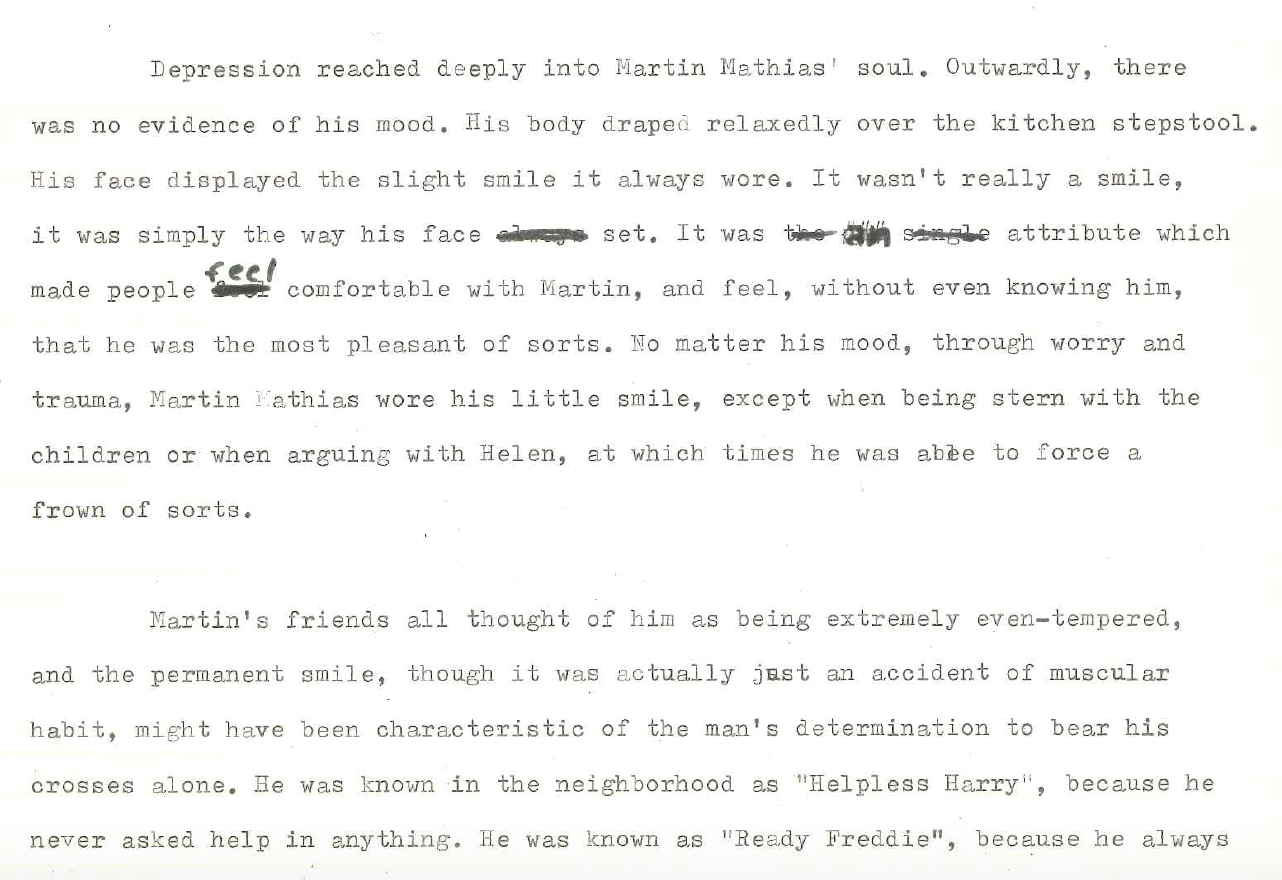
The opening for the original story that would become Martin.

In 1975, a new feature film production was announced in the trades called Blood. It was a vampire movie to be written and directed by George Romero, and produced by Joseph Brenner Associates.* It would have been filmed in early 1976, but nothing would come of it in that form. The initial versions of Blood in the archive identify it as an early version of Martin, which he would film in 1976 without Brenner's funding on a shoestring budget - according to Martin's cinematographer Michael Gornick, the budget was able to stay so low in part because they shot most of in the house of crewmembers Pasquale and Tony Buba's mother and were able to finagle other free shooting locations in Braddock through friendly connections, and in part because a substantial portion of the film stock they used was swiped from the TV documentaries Romero was making at the time. 

This initial version of Martin tells the story of a middle-aged family man, Martin Matthias, who finds himself suddenly succumbing to a strange illness that drives him to kill people and drink their blood. An elderly relative named "Tati Voda" (the name retained for Tati Cuda all the way to Martin's shooting script and changed at the last minute) understands the disease as a kind of family curse.

Martin Mathias in Blood is a dissatisfied businessman with a wife named Helen and an elderly relative named Tati Voda. It becomes a sort of midlife crisis movie, with a blood disease resembling vampirism driving him into a wild life of sex and violence that is at first a relief from the punishing indignities and unhappiness of his life. It resembles a drug addiction. When he loses control and feeds on a woman he had fallen in love with, he realizes how far gone he is and kills himself. The film ends with him in the funeral home, opening his eyes. The punishment for his transgressions is that he can’t even die. (George would channel some of these ideas into Bruiser more than two decades later.) Romero would reconceive the film from the ground up as a vehicle for a young actor he had seen in a local production of Philemon, John Amplas. But the vampire would still be named Martin, there would be an elderly relative named Tati Voda, and vampirism would be a physiological disease rather than something supernatural. 

In an envelope marked "Old Writings," there was a collection of stories and treatments - all of them undated - that Romero worked on at some point before the mid-1970s. Our best guess is that most of them are from after Night of the Living Dead and before Romero's partnership with Richard Rubinstein begins in 1974, but this is just a guess. In that envelope is a story fragment that appears to be the first chapter of an unfinished novel. It's about a middle-aged Pittsburgh businessman who is growing tired of his life and is dangerously narcissistic to the point of a Messiah Complex. The protagonist of that story is named Martin Matthias. His wife is named Helen. And he refers in his internal monologue to elderly relative Tati Voda. 

After a few pages of set-up, the fragment ends. But it's followed by a handwritten page of notes that seems to be Romero's attempt to work through possible directions in which to take the story: 

"argue: physical vs mental"

"Death...vivid imagination"

"E.S.P."

"higher order of destiny...you're mental"

"others not sensitive –"

"Murder - alright... not nec. evil. if you could live with it"

"higher order destiny

"cheat: solitaire. exams in school...blow job"

"plane crash..."

"robbery..."

"cancer..."

"bomb..."

"world destruction"


And so on. There are obvious differences, but it seems that this was the first attempt to work through the idea that would become Blood and then Martin. There's no indication of vampirism on that notes page, but it seems apparent that that would be the answer he was searching for on that notes page. So he had a set of characters that he'd begun thinking about and placed them into this vampire scenario for a film to be produced by an experienced horror distributor. But when, for unknown reasons, that production fell through, Romero reconceived the film entirely while retaining his own version of vampirism as a disease, the name of the main character, and the figure of Tati Voda. Is that note about murder being "not nec. evil" the germ that would develop into story about Martin's physical need to drink blood? 


* Side note: Brenner was primarily known as a distributor and he had enjoyed a great deal of success importing Italian horror films by filmmakers such as Sergio Martino and Umberto Lenzi and, later, Dario Argento, whose Suspiria was one of the last films he distributed. It seems possible that it was because of the connection through Brenner that Argento initially approached Romero to make Dawn of the Dead. Brenner might also make an appearance in the backstory of one of the curiosity's in Romero's career: the 10 minutes of footage that he reportedly shot for the US release of Lenzi's bonkers giallo Spasmo. That connection, however, could also have come through Spasmo's US distributor, Libra Films, who would re-release Romero's film The Crazies shortly after that and would distribute Martin in 1978. The latter film underperformed at the box office in part because it was overshadowed by the distributor's first sizable hit, released *just* after Martin: David Lynch's Eraserhead. Libra was a very small distributor with limited resources, and with two "cult" films in release, their promotional efforts were quickly focused on Eraserhead which, to everyone's surprise, met with substantial (and growing!) success on the thriving midnight movie circuit. 


-Adam Charles Hart

Updated:
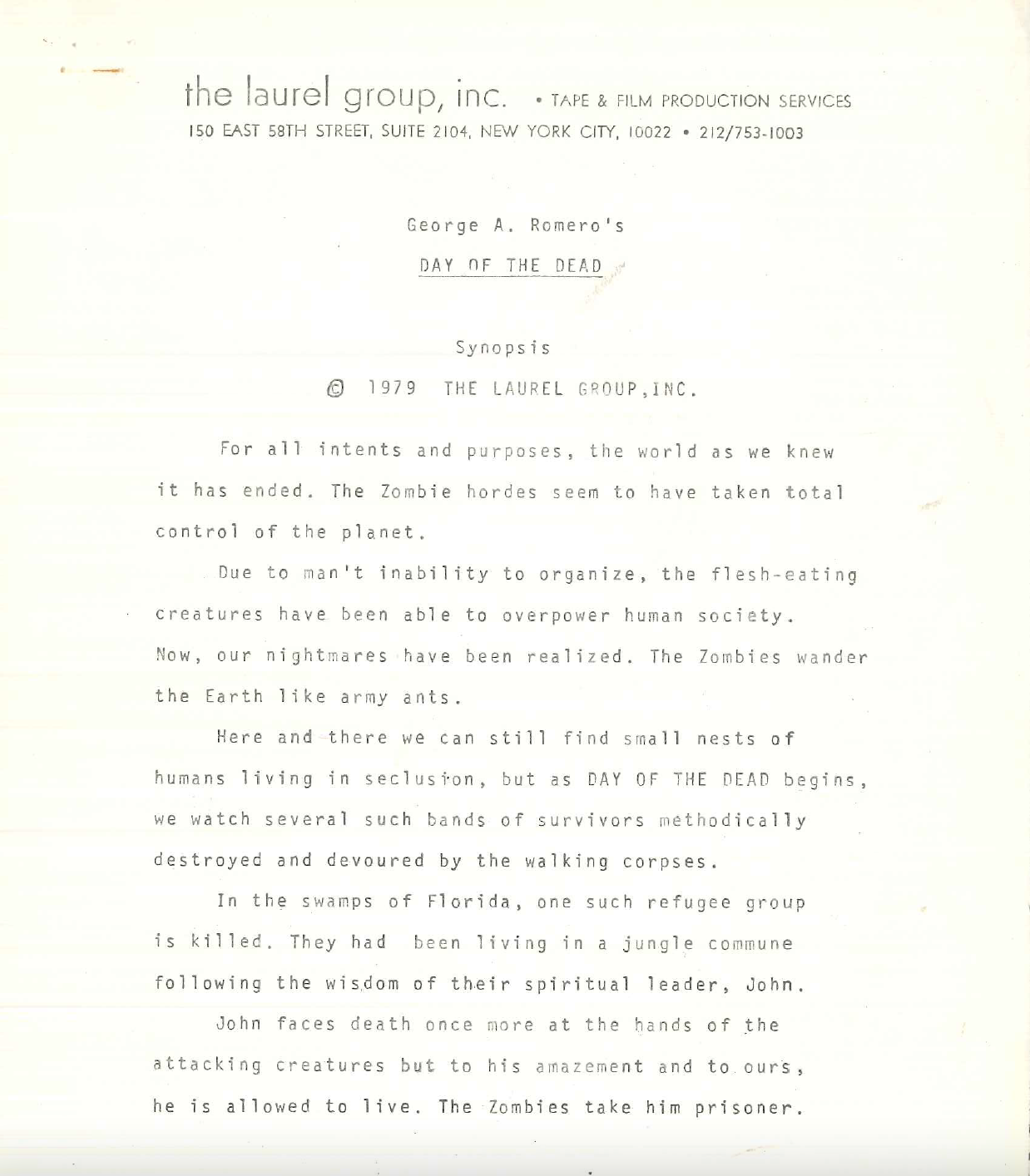
Original synopsis for Day of the Dead.

In 1979, flush with the surprisingly immediate success of Dawn of the Dead, Romero quickly began developing another Dead sequel. It would be another 5 years before Day actually went into production, and its final form would be radically different not just from his original idea. This brief synopsis is just over 4 pages long – almost more of a sketch than a proposal – but much of it would be retained in the early drafts. 

This synopsis was whipped up as preparation for a 3-picture deal that would ultimately finance Knightriders, Creepshow, and Day - the zombie sequel was a necessary component to obtain funding for the other two. Romero would develop a version of Day over the next few years that was, as I've described on this blog before, a grand epic. He would ultimately have to hack at the budget so much that he would later consider the original version of Day to be an entirely different, unrealized project from the film he ultimated produced and released. 

In the synopsis, "the world as we know it has ended." The process of societal collapse shown in Dawn is now complete and zombies are the dominant population on earth. The lone exceptions are isolated refugee groups - the spiritual leader, John, of one of these groups will be the hero of the film - and fascistic militaries that have sprouted up across the country. John's "commune" is attacked by zombies, who kill the rest of the group. This is where Romero's approach to zombies differs radically from what came before: 

John faces death once more at the hands of the attacking creatures but to his amazement and to ours, he is allowed to live. The Zombies take him prisoner.

We also note that the creatures do not devour the other victims. Instead, they load the corpses onto refrigerated vans. This organization is startling in creatures who had previously acted on pure animal instincts. We are puzzled until we become aware of human "Lieutenants", who are running the maneuvers. The Living Dead seem to respond to the officers' commands and do their bidding in every way.

In this version of the story, the zombies are trained by the militaries to kill rebels and refugees. Their training in some early scripts goes beyond blitz attacks to include clean-up, operation of machinery, and even precision shooting. That training requires, of course, ensuring that the zombies do not get hungry, a logistical problem that leads to some of the most disturbing moments in Romero's entire body of work. A version of this persists into the final film, but here the villainous General Balthazar, who commands a literal army of the undead, has instituted the farming of humans to provide meat for his troops. (He first begins exploring this idea in 1974, with the first, unfinished script of Dawn of the Dead.) Even darker: this version of Romero's zombies starve and wither away if they don't feed. So not only is Balthazar slaughtering humans like cattle, he is perpetuating and worsening the zombie apocalypse. 

The story climaxes with a battle between Balthazar's zombie army and that of a rival military leader, which provides enough confusion and cover for John and a group of rebels to break into the general's headquarters in an underground bomb shelter. John dies in the attack, but his supporters prevail, exiling Balthazar to the surface, "where he and a small band of defeated tyrants are literally consumed by the returning army of the Living Dead."

The group that Romero does actually refer to as "the 'good guys'" wait out the zombies and let them start to die and disperse before resurfacing to clear up the corpses and mourn the dead. The synopsis ends with a remarkable bit of ambiguously hopeful poetry from Romero:

Then the humans begin to look for ways to resume a life.


-Adam Charles Hart