Articles

Updated:
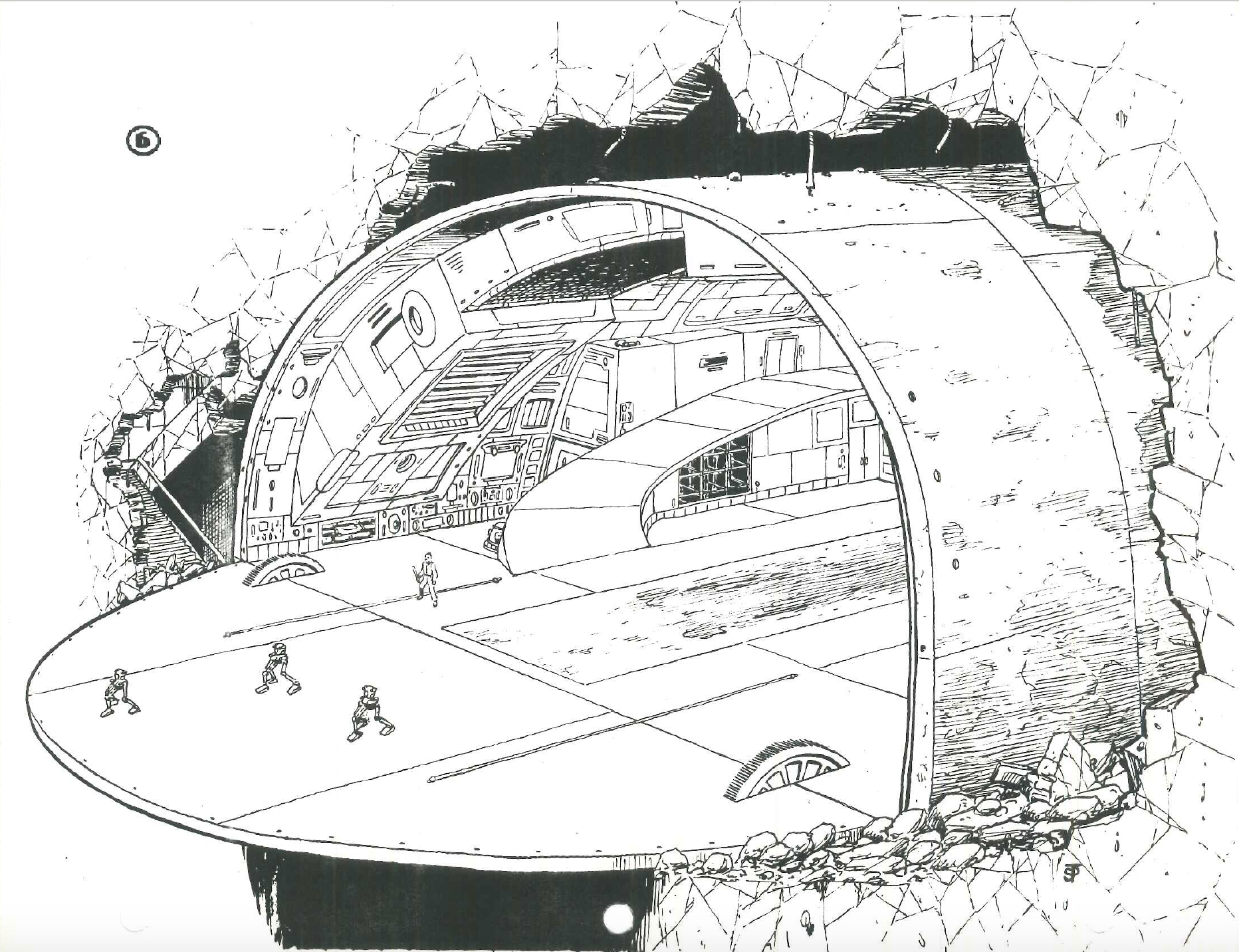
The alien ship in War of the Worlds.

War of the Worlds was one of a handful of science fiction projects that Romero undertook in the post-Dawn era, of which Copperhead received the greatest part of his attention and energy. For Romero, science fiction was not just a lateral move into other brands of creature features, but a leap into higher budgets and narrative ambition. It was in this period that he conceived of Day of the Dead on an epic scale, and in which he worked with Stephen King on plans for a full-scale adaptation of The Stand. Among those projects was his first collaboration with a Latent Image partner in a decade, Rudolph J. Ricci’s Shoo-Be-Doo-Be-Moon, a goofy musical parodying alien invasion movies. There was a project written for the stage (though the scope seems better suited for film than the stage) transmuting Tales of Hoffman into a space opera. That project, Hoffman: Through the Mansions of the Moon, would also have been a musical, with Romero’s frequent collaborator John Harrison writing the music.

Romero wrote a full script of War of the Worlds in 1986, as his plans for Pet Sematary were falling apart and he had not yet begun working on Monkey Shines. There was interest from Paramount, which placed the film on their release schedule in 1987. But in 1987 Star Trek: The Next Generation was a surprise hit, and the studio decided to capitalize on the trend by cancelling Romero's project and instead producing an ongoing television show that debuted in 1988. Romero got far enough in production for there to be designs for alien machinery and for the setting, and for there to be draft revisions. It would have been Romero's highest profile film to date, undoubtedly his highest budget, and his first studio film. It would also have been his best chance to branch out of the horror genre in the minds of both financiers and audiences. Had he gotten to make it, it seems extremely possible that the second half of his career could have taken an entirely different shape. Those implications aside, it is also one of Romero's most entertaining scripts!

Romero's War of the Worlds: The Night They Came radically re-conceives H.G. Wells' story and its various adaptations (including the infamous radio broadcast created by Orson Welles, one of Romero's artistic heroes), that moves it from the countryside into a crowded metropolis. All the action takes place in and around a single skyscraper into which a malfunctioning alien ship crashes at the start of the script. The cross-section of characters includes reporters, scientists, businesspeople and various office drones, and a janitor, Zack Howard, who is the film's most heroic figure (if not necessarily the main character). Romero planned the adaptation to have two parts, although the archive givess no indication that the second script was ever written. The first part is structured around a core group of characters attempting to survive that single ship, with the second part presumably being a special effects extravaganza in which entire planet fights back against the legions of alien spacecraft on their way to Earth. As for the aliens, they are not the spindly large-headed creatures of previous versions but rather formless blobs that are encountered inside bulky contraptions that the humans at first mistake for robots.

The group, trying to survive and fight back while urgently figuring out the baffling nature of the threat, eventually discovers that the little blobs operating that terrifying machinery are a hive mind, a single entity spread out across geographically disparate pieces that can break apart and join back together again. They can also take control of human bodies, killing the host but possessing brain and body. In the script’s climax, the corpse of parapsychologist Dorothy Lyman – the character who has done the most speaks to the human survivors in broken English:

Now and future time…..I am being this planet….this habitat. You are many. I am all. I am ever. I am undead. […] I am….above you. I future create habitat you. I not harm when you serve I need. I harm when you harm I.

To which Zack Howard responds “KISS MY ASS, MOTHERFUCKERS!” A very human response, and the sort of thing that for Romero usually compounds into greater and greater conflicts. Here, however, that first impulse to violence seems to be more correct than it usually in a Romero script. We can’t know how Romero would have resolved the invasion in  “War of the Worlds – Part II: The Day of Combat.” But the end of this first part, we see something almost wholly unique in Romero’s work: cooperation. Allan, a reporter, wonders if the coming battle would be familiar to humanity: “Salvador. Nam. Huddled in some alleyway….waitin’ for the bomb that has our name on it….askin’ ourselves this very same question. Do we stay or do we run? Is it our war or somebody else’s?” Janet, a fellow reporter and Allan’s sometimes girlfriend, gives the stirring, heroic message in response, declaring that “This is our war. This is everybody’s war.” The script ends on a rousing note with the three survivors resolving to fight the invasion together.

Zack, a black character very much in the mold of Ken Foree's Peter from Dawn, recognizes that they mean to enslave humanity, and that understanding comes out of the pain and trauma of American racism. “Those things talkin’ ‘bout we gonna be their slaves, man. My grandaddy was a slave.” The aliens that claims that they won't hurt humanity unless they resist are actually offering neither peace nor coexistence, but rather dominance and exploitation. But their very mode of existence is itself a threat: the de-individualized hive mind in which every part is interchangeable and expendable, and in which any person can be killed and possessed, is just as dangerous in Romero’s thinking as are their laser cannons. Lack of individuality is equated with slavery, and with death. It is another kind of zombie – referred to repeatedly as “the undead” by the aliens – in which one’s body becomes a vehicle for someone else’s agenda.

That imperial domination becomes even more explicit in the second draft. In the revision, a character named Tommy Peterson is possessed and offers a variation:

in soon time…. more of i will arrive this planet. you…. are many. i am more. i am all. i am forever. […] i future allow nourish you. i future create habitat you. i not harm you when you serve i. […] i not am enemy. you need understand…. one law only. i am…… sovereign…. you exist…. only to serve. now you go. speak this law among others.

This fear of humanity becoming a permanently subservient underclass is, of course, grounded in a history of atrocities committed by humanity, and specifically by America. Zack makes it explicit: we will all become slaves, white America’s crimes being revisited upon itself by another “sovereign” empire.

Only three years earlier, Romero had written versions of Day of the Dead in which zombies had become that permanent underclass. Here the aliens threaten humanity with a future akin to zombiedom. Zombies were figures whose trace remnants of humanity had already become essential to Romero’s horror philosophy. But whereas Day takes place after humanity has failed to cooperate to overcome the zombie hordes, his War of the Worlds actually dares to imagine the possibility of humans working together. to prevent it. As in Night of the Living Dead, characters fight amongst each other over whether the proper course of action within this besieged building is to go up or down: up to the roof and the possibility of helicopter escape, or down to the street where they can leave by foot. There is dissension and disagreement throughout. But, in the end, there’s cooperation and hope among the three survivors. They will fight to save humanity, together.

There are a few immediate caveats tempering Romero's optimism. First, this is only a group of three people, two of whom are in a romantic relationship. Second, these three have no actual power against the incoming horde of alien ships. It is indeed a hopeful note to end on, but one that is largely theoretical rather than practical. Would the next script have begun with the trio attempting to convince the world’s governments to join forces? Would they simply be soldiers in the war? The first script was conceived with at least one eye towards budgetary constraints, limiting the number of sets and characters, focusing special effects in a handful of flashy scenes. But how much grander would the scale have had to grow to accommodate the scope of the actual battles?

For all of its hopefulness, in other words, Romero still cannot imagine a scenario in which humanity and its governments would successfully work together in harmony to defeat a civilizational threat. That would be punted into the hypothetical second script, along with questions of budget and scope.


-Adam Charles Hart
Updated:
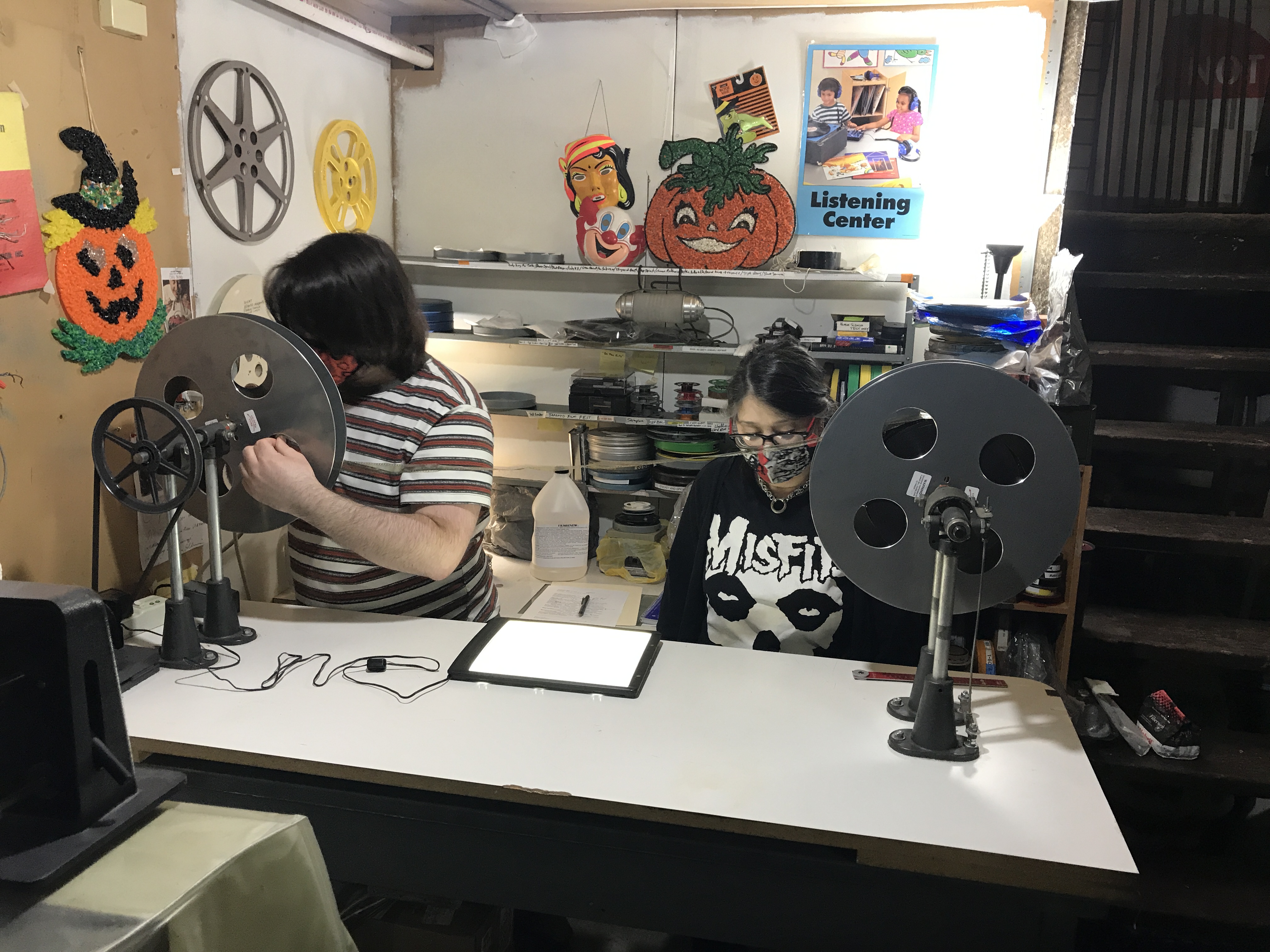
Steven Haines and Miriam Meislik inspect Jacaranda Joe's 35mm footage.

Last week, I joined Media Curator Miriam Meislik and Steven Haines, local archivist and proprieter of Flea Market Films, to inspect the nine reels of 35mm film recovered from Jacaranda Joe, George Romero's once-lost short film made in 1994. Several of the reels were visibly damaged, with warping and sticking making it dangerous to even unroll the film. 

However, the damage was almost entirely limited to positive prints. Six of the reels were original camera negatives from the filming of Jacaranda Joe at Valencia College (then Valencia Community College), with director of photography and Valencia faculty member Dominic Palmieri, and those reels are either pristine or have sustained minimal damage. Comparing the negatives with the surviving cut of the film as well as the storyboards, this appears to be complete: as far as I can tell, every 35mm shot is accounted for. Jacaranda Joe also includes a great deal of location footage shot on video, so the negatives do not include any of those images. (The only copy of the video footage that we have found is what is contained within the VHS workprint within the archive. It seems likely that those original tapes are lost.) 

This is all incredibly exciting! Our first priority here, as it is with all of our archives, is preservation. And with the recovery of this 35mm negative, we can ensure that this unseen short from George Romero's filmography will be preserved in its original format. 

- Adam Charles Hart

Updated:
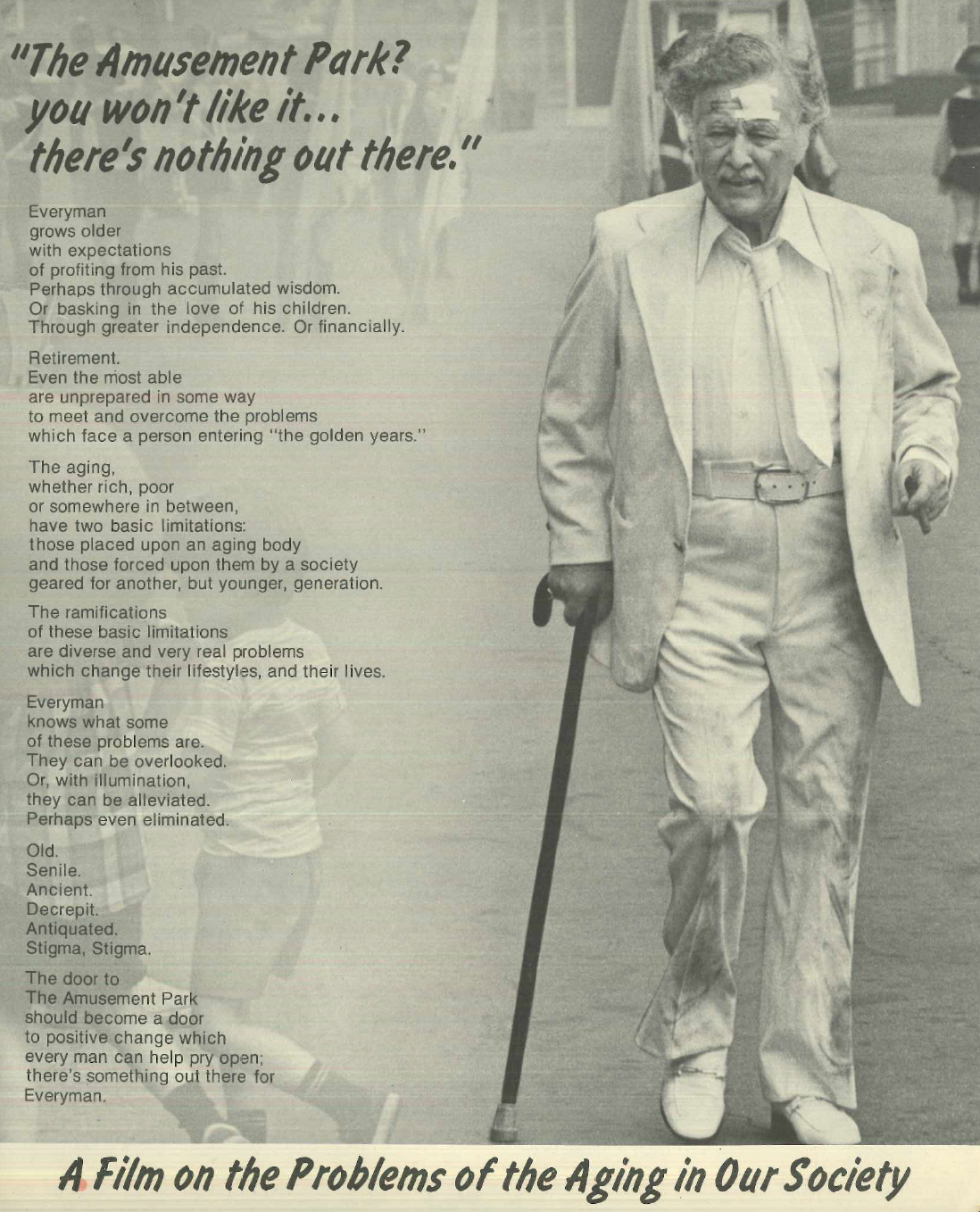
The Amusement Park promotional brochure

When Night of the Living Dead premiered in late 1968, the idea of a feature film from Pittsburgh was a novelty, to say the least. The sad saga of how Night’s profits failed to trickle back to the Pittsburgh-based filmmakers is well-known at this point, but, even without their share of the box office, George Romero and his compatriots in the Latent Image had momentum. They had proven that a low-budget indie from Pittsburgh (of all places) could be a hit! And, of course, they had proven to be hitmakers.

The tight-knit group had been working together since college, primarily making commercials and other short work for TV, but always aiming to make that leap into features. In terms of their daily output, Night was a brief blip in their work-for-hire assignments, as they returned to commercials and other sponsored work right away. Thanks largely to the national profile of Night, however, they began getting bigger commissions – including working with politicians like Lenore Romney and Albert Brewer (in his gubernatorial campaign in Alabama against segregationist George Wallace). And they were eventually able to funnel their status into THREE independent feature films that they produced very quickly, one after the other, in the early 1970s. 

The first film was a Graduate-inspired dramedy called There’s Always Vanilla, an expansion of a short film the group had made with charismatic local stage actor Raymond Laine. (During development and fundraising, the film was known as At Play with the Angels and has also been released as The Affair.) They quickly followed that up with a feminist film about witchcraft called Season of the Witch (aka Hungry Wives, aka Jack’s Wife), and then very soon after that with The Crazies (aka Mad People). It was an impressive, hugely productive period!

But, unfortunately, none of the films made any real money. After seeing only a small fraction of the profits from Night and very little return from their subsequent features, the Latent Image was in debt and the filmmakers were increasingly frustrated. By the time that The Crazies was completed, they had basically split up. Their members would find ways to work together again throughout the next couple decades and "The Latent Image" as a name would hold on for a little while longer but, by 1973, the group that made Night of the Living Dead was no longer an active concern.

Romero had directed four features, the first of which was already being regarded as a genuine classic of the horror genre, but in the eyes of financiers it might start to look a little bit like a fluke. He would try to get a sequel to Night off the ground, and certainly had PLENTY of other ideas that he’d develop in the mid-1970s, but he also simply needed to work at a time when raising money for feature films was becoming increasingly difficult. In spring 1973, he was interviewed for a publication called Filmmakers Newsletter by a New York-based video producer and distributor named Richard Rubinstein, who had been providing a variety of video production and distribution services since the technology became commercially available in the late 1960s (including some involvement in early video art and video documentaries under the rubric of Ultimate Mirror, Ltd). The two hit it off and quickly began concocting possible collaborations. Rubinstein and Romero would form Laurel Tape and Film, Inc. - at first a partially owned subsidiary of The Latent Image. Rubinstein would go on to produce all of Romero’s films from Martin to Day of the Dead. For the moment, however, they still had to right the ship and re-establish Romero as a dependable filmmaker. That included a new push for Romero as a director of commercials and sponsored films, and it included TV.

Romero filmed an hourlong documentary about the star Steelers running back Franco Harris (with whom he’d try to work on at least two projects later in the next few years) and while he was finishing the editing, he began another documentary portrait of one of the most popular athletes in the world, O.J. Simpson. The result, O.J. Simpson – Juice on the Loose, was broadcast nationwide on ABC, and Romero and Rubinstein used it as a kind of pilot for The Winners, a series of sports documentaries that would begin airing on regional stations with the already-completed Franco Harris: Good Luck on Sunday. (This era of TV productions also included Magic at the Roxy, a 1976 special filmed in Homestead. Hosted by Peter Graves, the special’s lineup of magicians included soon-to-be-immensely-famous David Copperfield in his first national TV appearance.) Romero wouldn't direct another feature until Martin in 1977, but he remained furiously busy in the interim, largely making stuff for TV while trying to get features like Blood (the first version of Martin), The Footageand Gunperson off the ground. The Winners provided regular work for Romero, and would give a number of important collaborators some of their first gigs with Romero.

Near the start of this turn to television, Romero and a collaborator named Walton Cook developed The Amusement Park. The film was sponsored by the Lutheran Service Society of Western Pennsylvania, which was looking to raise awareness of the plight of the elderly. That effort was tied to Meals on Wheels, a relatively new initiative that was then closely affiliated with the Lutheran Services. The script was written by Cook and directed by Romero, filmed on 16mm largely at Westview Amusement Park in Pittsburgh’s north suburbs. The budget was bare bones – one estimate places it at $34,320 – and even that was possible only because it was partially covered by a $12k grant from the Pitcairn-Crabbe Foundation. The main role would be played by Lincoln Maazel. Fans of Romero will recognize Maazel as Tati Cuda from Martin, but at the time he was a familiar figure to Romero and other devotees of the Pittsburgh stage, where he had been a fixture since the mid-1960s. The film would eventually run 54 minutes – presumably with an eye towards hourlong TV broadcasts, as it would be advertised in the trades as a TV special:


Station Buyers And Program Managers:

Did You Know That May Is Senior Citizens Month?

And That

“The Amusement Park”

Is Available For Most Markets

THE AMUSEMENT PARK

Directed by George Romero

Is A One Hour Television Special Which Takes A Surrealistic Look At The Problems Of Those Who Have Reached “The Winter” Of Their Years

In a later press released announcing Romero and Rubinstein's partnership, The Amusement Park is mentioned just after The Winners and Magic at the Roxy, described as "a one hour special" - indicating that they were initially thinking of television as the ideal format for it.

The first documented screening of the Amusement Park is the 1975 American Film Festival in New York - a festival that specialized in non-theatrical films, including educational films but also documentaries and avant-garde work. (That year's top prize, for example, would go to Antonia: A Portrait of the Woman, a documentary about pioneering conductor Antonia Brico, co-directed by esteemed documentary innovator Jill Godmilow and folk singer Judy Collins.) It would screen in Pittsburgh as part of a Romero Retrospective at the much-mourned Pittsburgh Filmmakers in October 1986, but we cannot confirm any other public screenings before 2001, when it showed at the Torino Film Festival and the Cinemathèque Française. It may very well have been screened locally by the Lutheran Society or by local churches in 1974, but there's no evidence or discussion of any showings in Pittsburgh before that mid-80s retrospective. 

We DO know that Romero was always fond of the film: he screened his own print in his offices for scholar Tony Williams during a research trip. But, as an "educational" film that is too strange to work as a documentary but not quite horror, and as a 54-minute movie too short for a feature and too long for a quick watch, it went largely unseen and unknown for the next 45 years. It was never really "lost": rather, it was just a little too weird to become widely available. (As far as I can tell, Williams was the only scholar or critic to discuss the content of the film before 2019.)

The film is an utterly unique, often hallucinatory take on the educational film, wild and wildly ambitious in style and structure. In many ways, it was more reminiscent of the era’s European art films than it was of other industrial films. Instead of a more straightforward documentary or illustrative, broadly realistic narrative, The Amusement Park spins a dizzying allegory about an old man facing a litany of hardships, threats, and humiliations. It's one of Romero's most inventive films, and also one of his most emotional: terrifying, heartbreaking, infuriating. 

Per the film’s promotional brochure:

The Amusement Park is a film that does not deal with problems of aging in the usual documentary style. Rather, it is a theatrical representation, a symbolism, an allegory. The Park represents our current society.

This is the story of a universal man, symbolized as one who has recently retired, who goes out into the amusement park to find his happiness as an older citizen.

As he travels through the amusement park, he begins to experience the reality of being old in a young society. He is cheated, degraded, beaten, ignored; he discovers what loneliness is.

I'd like to point out that the film is highly unusual for educational film - certainly not something you'd picture being shown to bored sophomores in home room - but that is still precisely what it is. The Lutheran Services wanted a film they could use to recruit volunteers for programs to help the elderly, and The Amusement Park is very effectively designed to spur its audience to action. Rather than operating in the register of information delivery, it feels like a nightmare. Or, like a horror movie. Romero is speaking to fellow young people, scaring them into sympathy. It's a film "on the problems of the aging in our society" that wants to communicate exactly what it's like to feel isolated and helpless in a world that doesn't seem to value or care for the elderly. 

The George A. Romero Foundation, with support from crowd funding, restored the film with IndieCollect from the surviving 16mm prints. The restoration premiered at Pittsburgh’s now sadly-defunct Regent Square Cinema, and played at MOMA in early 2020 before the pandemic put a halt to further screenings. It will shortly be available to stream at Shudder, a fitting home for a "new" Romero film.

-Adam Charles Hart

Updated:
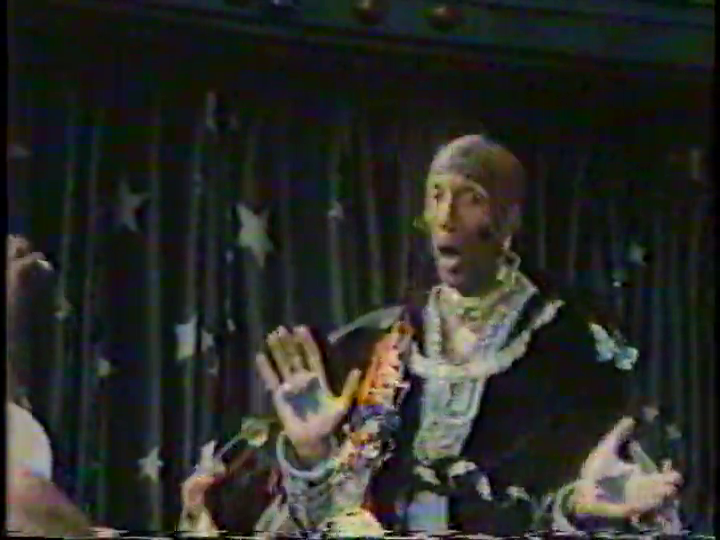
Brother Blue as Merlin in Knightriders.

Forty years ago, George Romero's Knightriders reached theaters. It was the first film of a three film deal that Romero and producer Richard Rubinstein had negotiated, capitalizing on the remarkable box office success of Dawn of the Dead. That deal required a sequel to Dawn but allowed Romero a kind of freedom that would be utterly unique in his career. After Night of the Living Dead, Romero and his collaborators in the Latent Image had enjoyed a great deal of artistic liberty, but on relatively paltry budgets. Knightriders was the first time in his career that Romero had the support to make whatever kind of movie he wanted, and he made the unexpected choice to spend that creative capital on a transposition of Arthurian legend to a modern day troupe of "knights" who joust on motorcycles at Renaissance Faires. It hit theaters alongside another Arthurian re-telling, John Boorman's higher budget, higher profile Excalibur, itself a radical re-envisioning of the traditions but with the expected period trappings. 

Audiences and critics didn't quite know what to make of Knightriders. It was a passionate, utterly sincere film about the ideals and convictions of motorcycle jousters, and as such, it didn't fit too comfortably into any of the expected boxes. There had been counteless biker exploitation movies in the 60s and 70s, but none of them were set at a Renaissance Faire, which was itself a new and not particularly well-known phenomenon. Unlike Excalibur or Richard Lester's Robin and Marian, it didn't offer the fun, escapist spectacles of medieval pageantry. It was an action movie, but one that is very talky, in which the primary narrative conflict comes from several of the knights being tempted to form their own offshoot by a couple of sleazy promoters. And it was coming from a filmmaker who was known exclusively as the director of a couple of gross-out zombie movies. In fairness to the distributor... how do you sell that? It is, in essence, a wholly unique object, one that touched on a bunch of different categories but which delivered something different from what ticket buyers would expect from anything marketed along those lines. And it was almost two and a half hours long.

It was a deeply personal project for Romero, one in which he was clearly working through his own convictions and internal conflicts about his own chosen profession, filmmaking. As a filmmaker who had gutted out almost twenty years in the trenches of regional filmmaking making commercials, sponsored films, and TV documentaries alongside his mostly horror-ish features, he was fiercely committed to remaining independent and to working in his adopted home of Pittsburgh, developing relationships with cast and crew that he'd return to again and again. Knightriders is, clearly, an analogue for his own idealistic committment to a certain way of making films, one that emphasized community and collaboration, one that Romero contrasted with the glitz and glamor (and money!) of Hollywood. He was always an outsider, but Knightriders was his argument for that outsider status as an essential aspect of his filmmaking. 

His first cut of Knightriders ran 2 hours, 45 minutes. He screened it for his financier in his offices in Pittsburgh in early February, 1981. This was his preferred version, one that he tried to convince his financiers to release. The archive contains a VHS transfer of this "director's cut" on two tapes. 

Perhaps the most remarkable thing about this cut is how little was changed for the theatrical release. Tasked with cutting the running time down considerably, Romero and editor Pasquale Buba removed twenty minutes primarily by trimming scenes: shortening or removing establishing shots, cutting out a line of dialogue here and there, and tightening up the jousting scenes as much as possible. That in itself tells us just how fervently Romero believed in that first version.

The most substantial loss from that original version comes early on, when the director's cut establishes more about the wider Renaissance Faire community: shots and brief scenes of vendors and other supporting characters, including a scene of Merlin - played by the amazing Brother Blue - performing a routine selling some kind of miracle snake oil to a skeptical crowd. Other scenes take us behind the scenes of the troupe, fleshing out some of the minor characters and exploring the dynamics within the community. But it's also clear that Romero and Buba retained as much of the film and as much of each of his characters as possible. A Hollywood editor could easily cut the film down to well under two hours just by removing some of the detours into exploring the lives of supporting characters and focusing on the primary narrative conflicts. But that's never been Romero's interest, especially here. In a film about the importance of communal, collaborative creation, the story cannot be extricated from each of the members of that community. Minimizing the role of any of them would go against the ideals professed by the film! 


-Adam Charles Hart

Updated:
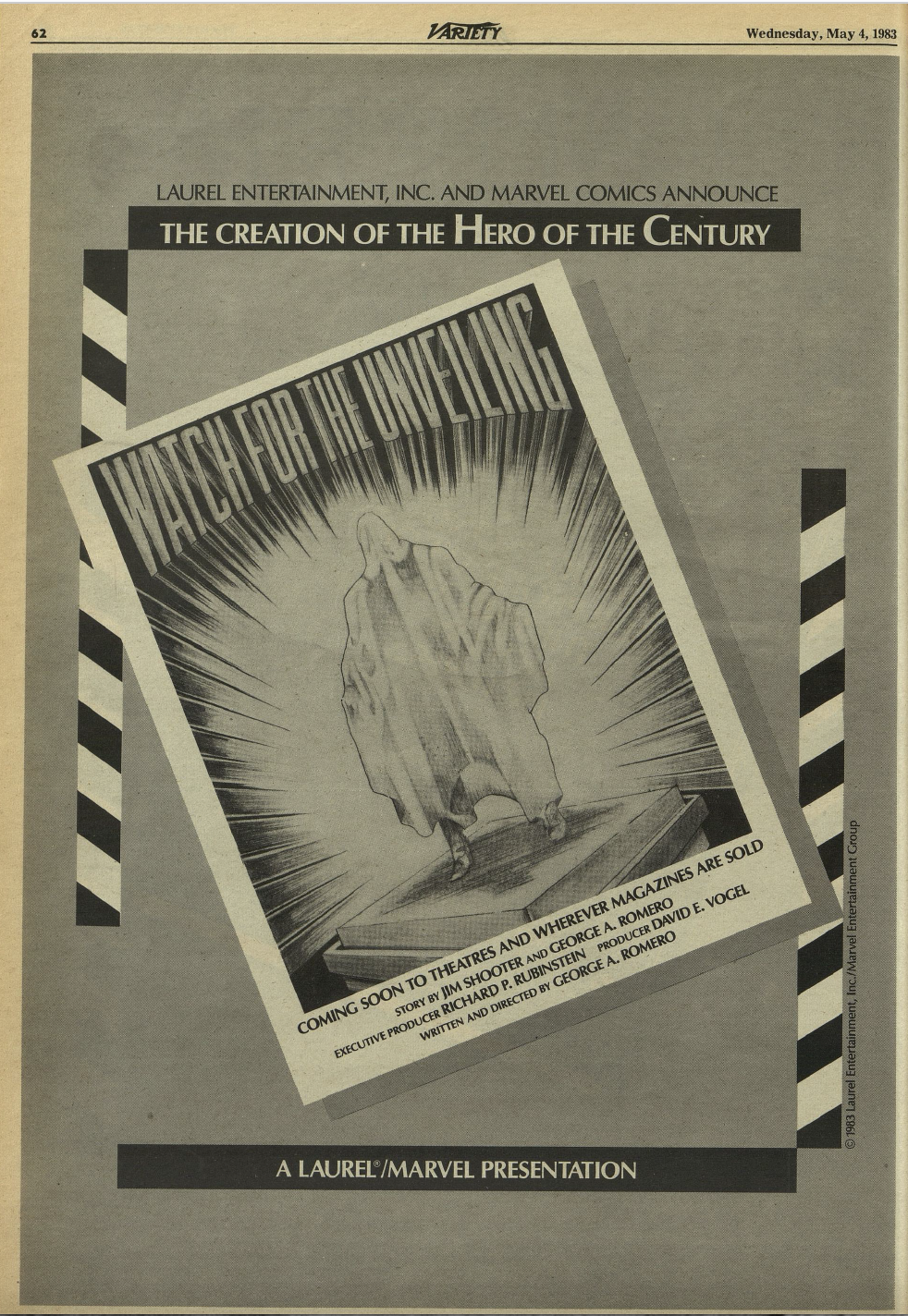
A 1983 ad for the unveiling of "The Hero of the Century."

In 1981, producers and executives arranged for Romero to meet the Pittsburgh-born Editor in Chief of Marvel Comics Jim Shooter. The two of them came up with an idea for a superhero movie, which they developed together until 1985. It would change titles several times over the years, with iterations including Mongrel: The Legend of Copperhead and Copperhead Conquers the Warhawks – the latter being Romero’s original title, too corny for Shooter’s tastes. The first version in the archive reads “LAUREL/MARVEL MOVIE Expanded Outline” on the cover, without a title, dated 12/9/1982 and credited to both Romero and Shooter. That first outline predates the copywrite date for the first Day of the Dead screenplay (December 28, 1982) by less than three weeks, indicating that they were being developed and written simultaneously. Romero and Shooter would work on the project for years, writing several drafts of the screenplay. Ads were taken out in Variety announcing the film as introducing the "hero of the century," but the funds for what would have been a high budget, fx-heavy action film never materialized. 

It’s science fiction, one of several sci fi projects that Romero worked on in the early 1980s, set “less than a lifetime into the future,” after the US-Soviet conflict leads to nuclear attacks on both sides. The result is not apocalyptic, but the conflict never ends, extending into an endless series of battles that always threaten to tip over into nuclear Armageddon. The scene setting is remarkably reminiscent of the early drafts of Day:

Around the world, the governments of allies and satellites of the superpowers, and those of many unaligned states as well, have collapsed. Much of the world is in chaos. Many countries have shattered into city-states, and regional governments. The superpowers struggle to maintain order within and fight on. The most dangerous enemies to the superpowers are the rebels and anarchists within their own borders who undermine the national will and ability to continue the conflict.

The action begins with an attack on a small group of rebels perpetrated by the government (though dressed as anarchists), apparently killing several, including Miwa York. Driven by grief, her husband volunteers for an experimental new procedure that turns him into a powerful cyborg – referred to in some drafts as a “mongrel,” a mix of human and machine. The various drafts refer to him as “Copperhead,” in a way that does not clarify whether this is a nickname or a code name or both. The language in the various drafts slangily refers to him interchangeably as “Copperhead” and “York,” but also “the Iron Man,” “the Iron Sheriff,” “the Copper Man,” and other terms referencing his machinery. The tone is often casually jokey in these early drafts, none of which are formatted like screenplays, and there will be wordplay referring to “the copper-Copper” and directly addressing the reader as “folks.”

York/Copperhead’s powers are, per the initial outline, “impressive stuff”: “He’s armored. He has super-strength, enough to lift a Lincoln Continental or punch through a brick wall. He has a built in phaser-like ray gun (he can holster it, but it’s attached to him by wires). He’s got enhanced senses, built in radar, and his on-board computer helps him analyze data, plan strategy, etc. He can win 50 chess games at once without looking, etc.” He is named the “sheriff” of Philadelphia, where his job is to patrol and protect the streets from criminals, but also, and most pressingly, from the “anarchist” rebels he is told have killed his wife.

The story is one of York’s growing disillusion at both sides, even as his sympathies lie primarily with the rebels. He discovers that he is not fully in control of his own body, that the government can take over to enforce violence against criminals, even if the crimes “are petty… the desperate acts of a suppressed people…Les Miserables stuff.” And his actions are constantly being monitored. York begins to resist the government agenda when he is forced to “vaporize” a bread thief who is identified as being somehow affiliated with the rebels.

However, the outline also spells out an explicit danger and cruelty to the rebel group. This is, at least in part, due to Shooter’s influence, but that influence seems to have resonated with Romero and impacted his other writing projects at that time - including the first version of Day of the Dead. The rebels are frequently described as “terrorists” and their leader likened to a “super-villain.” Some of their acts of resistance are “unconscienable [sic]… real ‘bad’ stuff with a high cost in property and lives…”

The outline’s conclusion comes when York kills the leaders of both the government and the rebels, assuming the leadership for himself. He recognizes that the government leader (known at this stage as “Leader”) is correct when he says that there needs to be a strong hand to prevent annihilation in the global war that has been raging for decades, but that seeming affirmation of military fascism is undercut by the final lines, describing York and his new love, Rada, who has been fighting alongside him:

It ends with York and Rada alone. York, burdened by the awesome responsibility. Can he take it? Will he be better – or will he be another Leader? Rada, too, wonders. She loves him but…

Romero and Shooter were clearly thinking through not just the overthrow of an oppressive government but a suspicion of anyone who would assume power, a favorite theme of both writers. They'd continue developing that theme further in subsequent drafts, making York's final decision to take power increasingly sinister with each revision.

There have been whispers that Marvel's next cinematic step will come in an adaptation of Shooter's Secret Wars miniseries, which Shooter began writing alongside his work on Copperhead. There are a number of thematic similarities between the two of them, and a very similar ending, in which a cyborg (Dr. Doom!) with seemingly noble goals takes power for himself. 


-Adam Charles Hart